
Tensions in the Middle East have escalated after Iran warned it could attack key infrastructure across the region if the United States carries out threats against its power facilities.
The warning followed a 48 hour ultimatum reportedly issued by former United States President Donald Trump, who said American forces could target Iran’s major power plants if the Strait of Hormuz is not reopened without threats to global shipping.
The Strait of Hormuz is one of the world’s most important oil routes, with about one fifth of global crude supply passing through the channel daily. Any disruption to the route often affects fuel prices and global markets.
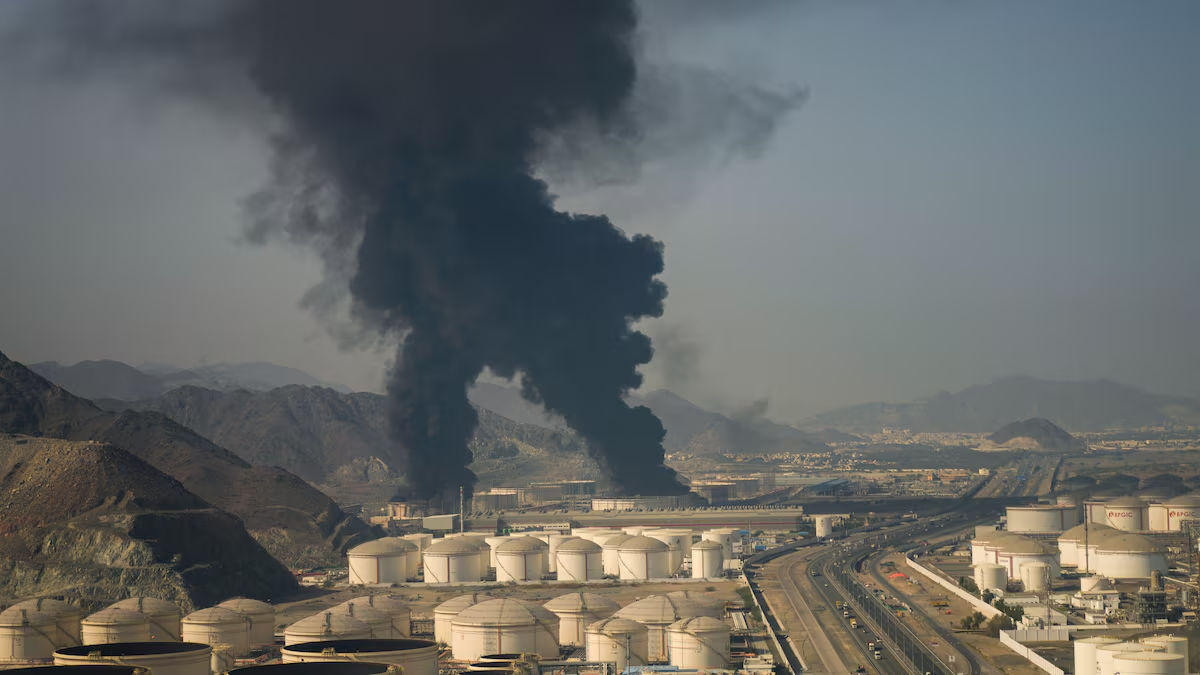
In response to the ultimatum, Iran’s military command said any attack on its infrastructure would lead to retaliation against United States interests in the Middle East, including energy installations, communication systems, and strategic facilities.
The latest development comes after several days of military exchanges in the region. Iran recently launched missiles toward southern Israel, with reports saying some projectiles landed near Dimona and Arad, leaving many people injured after air defence systems failed to intercept all incoming strikes.

Israeli forces later carried out air operations targeting locations in Tehran, further increasing fears of a wider conflict.
The situation has already affected global energy markets, with oil prices rising sharply amid concerns that prolonged fighting could disrupt supply routes. Brent crude reportedly climbed above 105 dollars per barrel as traders reacted to the uncertainty.
Several countries including the United Kingdom, France, and Germany have expressed concern over the growing crisis and called for stability in the region, while also criticising actions that could block the Strait of Hormuz.
Reports also indicate increased United States military activity in the area, with additional troops deployed and operations carried out near Iranian coastal positions to prevent further threats to maritime traffic.
There have also been reports of missile and drone incidents involving Gulf countries such as Saudi Arabia and the United Arab Emirates, raising fears that the conflict could spread across the region.
Security analysts say the situation remains highly unstable, warning that further escalation could affect global oil supply, international trade, and overall economic stability if diplomatic efforts fail.