
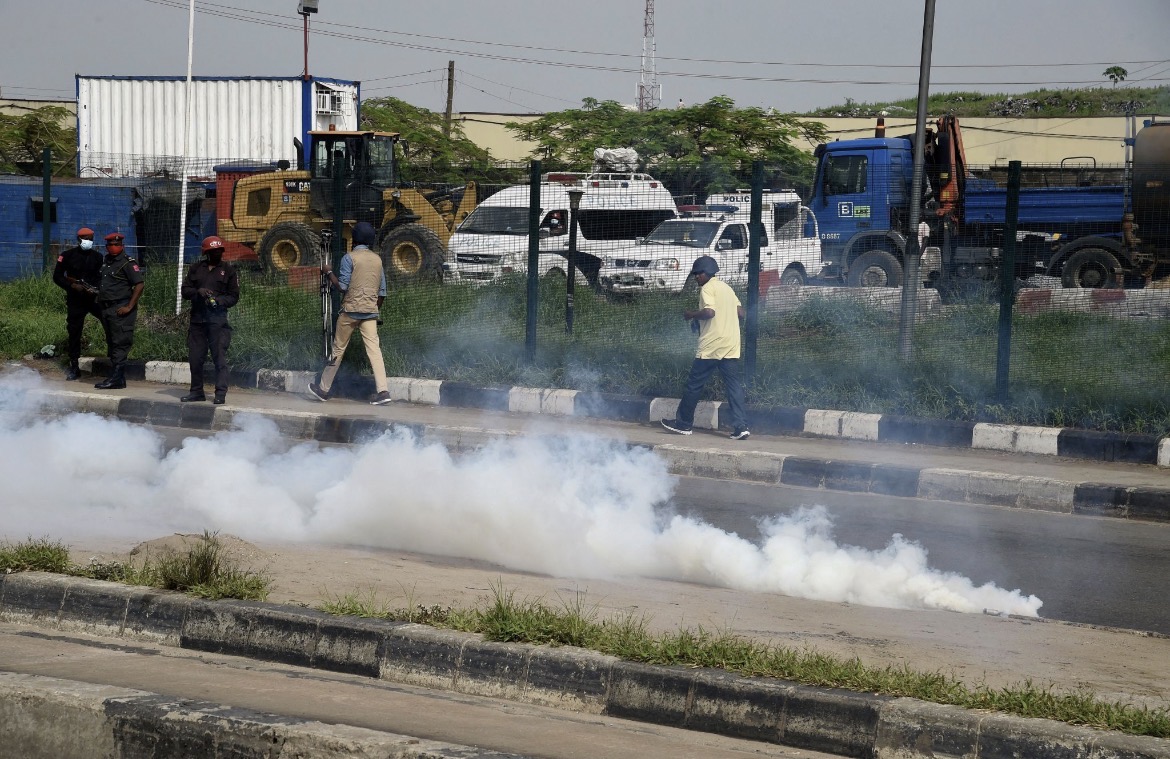
Tension flared on Wednesday at the Lagos State House of Assembly complex in Alausa, Ikeja, after police officers fired tear gas to disperse protesters demonstrating against demolitions and alleged forced evictions in parts of Lagos State.
The protest, which drew residents from affected communities and civil rights supporters, was aimed at pressuring lawmakers to intervene in what demonstrators described as a growing humanitarian crisis triggered by demolition exercises across the state. The gathering, however, was abruptly disrupted when security operatives moved in to clear the area.
How the Protest Unfolded
Protesters had converged early at the Assembly complex, holding placards and chanting slogans calling for an immediate halt to demolitions and the provision of compensation or resettlement for displaced residents. According to eyewitness accounts, the demonstration was initially peaceful before police officers released tear gas canisters to disperse the crowd.
The action triggered panic around the Alausa axis, forcing protesters, nearby residents, traders, and commuters to flee in different directions to avoid the choking effects of the gas. Movement around the complex was temporarily paralysed as people scrambled for safety, with shops closing abruptly and traffic slowing to a crawl.
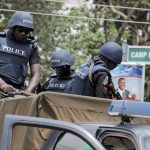
As of the time of reporting, security personnel remained stationed around the Assembly complex, while the protest had been temporarily dispersed.
What We Know So Far
- The protest took place at the Lagos State House of Assembly complex in Alausa, Ikeja.
- Demonstrators were protesting demolitions and alleged forced evictions in several Lagos communities.
- Police officers deployed tear gas to disperse the gathering.
- The incident caused panic and disrupted commercial and pedestrian movement in the area.
- Security operatives remained on ground after the protest was broken up.
There was no immediate official statement from the police or the Lagos State Government explaining the rationale for the use of tear gas or whether any arrests were made.
Background: Demolitions and Public Anger
The protest comes amid rising public anger over demolition exercises carried out in different parts of Lagos, particularly in waterfront, peri-urban, and informal settlements. In recent months, affected residents and advocacy groups have accused authorities of carrying out demolitions without adequate notice, compensation, or clear resettlement plans.
State authorities, on the other hand, have consistently defended the demolitions as necessary for public safety, urban renewal, environmental protection, or enforcement of planning regulations. Officials have argued that some structures were erected illegally or in locations considered dangerous, such as under power lines or along critical infrastructure corridors.
These competing narratives have fuelled repeated protests and legal challenges, with civil society groups warning that forced evictions risk worsening homelessness, poverty, and social tension in Africa’s most populous city.
Security Response and Civil Liberties Concerns
The deployment of tear gas has renewed debate about crowd control tactics and the balance between maintaining public order and respecting citizens’ right to peaceful protest. Human rights groups have often criticised the frequent use of tear gas in Nigeria, arguing that it can escalate tensions and endanger vulnerable individuals, including children and the elderly.
While the Nigeria Police Force has maintained that such measures are sometimes necessary to prevent breakdown of law and order, critics insist that dialogue and de-escalation should be prioritised during civic demonstrations.
Key Implications
- Public Trust: The incident may deepen mistrust between affected communities and government authorities.
- Legislative Pressure: Lawmakers at the Lagos State House of Assembly may face renewed pressure to investigate demolition practices and engage stakeholders.
- Human Rights Debate: The use of tear gas is likely to attract scrutiny from rights organisations and the wider public.
- Urban Policy Tensions: The episode highlights ongoing friction between Lagos’ urban development agenda and the realities of housing and displacement.
What Happens Next
With the protest temporarily dispersed, attention is expected to shift to whether organisers will regroup or pursue legal and legislative channels to press their demands. Observers are also watching for official reactions from the police, the Lagos State Government, and the Assembly leadership.
As demolitions and evictions remain a sensitive issue in Lagos, Wednesday’s events underscore how quickly grievances can spill onto the streets—and how the response to such protests can shape public perception of governance and accountability in the state.
Related: Workers Shut Down NLNG’s $10 Billion Train 7 Project in Rivers State Over Tax Deductions