

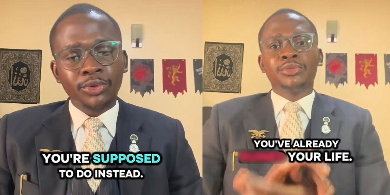
A Nigerian lawyer has triggered intense reactions across social media after sharing stark legal advice on what to do if a partner suddenly dies inside your home, warning that panic-driven actions could destroy an innocent person’s life.
The advice, delivered in a now-viral video shared on TikTok, has been described by viewers as unsettling but eye-opening, particularly in a country where fear and misinformation often shape responses to emergencies.
“Running Makes You Look Guilty”
In the video, the lawyer cautioned strongly against fleeing the scene, stressing that running away immediately places suspicion on whoever was present at the time of death.
“Don’t run. If you run, it will automatically be presumed that you are guilty, and it will become very difficult to prove your innocence,” he said.
According to him, once someone escapes from the scene of a sudden death, law enforcement agencies are more likely to assume foul play, regardless of whether the person had anything to do with the incident. He explained that such an action complicates investigations and shifts the burden heavily onto the individual to prove they were not involved.
Never Touch the Scene, Lawyer Warns
Beyond fleeing, the lawyer also warned against tampering with the scene in any form. He said people should never touch the body, attempt to clean bloodstains, wipe surfaces, or rearrange anything in the room.
He explained that even actions taken out of fear or shock could later be interpreted as attempts to destroy evidence.
“Once you alter the scene, it can be seen as obstruction of justice,” he warned, adding that such actions could attract severe legal consequences, including imprisonment.
Call the Police — Then a Lawyer
Emphasising the importance of timing, the lawyer advised that the police should be contacted immediately after discovering the death. He also urged individuals to reach out to a legal practitioner right after calling law enforcement.
According to him, many people damage their own cases by making emotional or unnecessary statements before understanding their legal rights.
“If the police arrive before your lawyer, there is only one statement you should make,” he said.
“She passed away and I reported immediately. That’s all. Don’t say anything else unless your lawyer is present.”
He stressed that speaking under pressure or trying to explain too much could later be used against someone, even if they are completely innocent.
Nigerians React: “Scary but Necessary”
The video has sparked widespread discussion online, with many Nigerians admitting they had never considered the legal implications of panic reactions during emergencies.
Some viewers described the advice as frightening, noting how easily fear could lead someone into serious trouble. Others praised the lawyer for shedding light on an issue rarely discussed openly.
Several commenters said the video highlighted the need for basic legal awareness, especially in situations involving sudden death, where emotions run high and decisions are made within seconds.
https://www.tiktok.com/@hassan.buhari14/video/7599628982853684502
Why This Matters in Everyday Life
In Nigeria, stories of people getting into legal trouble due to fear-driven decisions are not uncommon. Cultural beliefs, distrust of authorities, and panic often push individuals to act in ways that unintentionally worsen their situation.
The lawyer’s advice brings attention to a critical reality: innocence alone may not protect someone if their actions appear suspicious during investigations. Knowing what not to do can be just as important as knowing what to do.
The conversation also reflects a growing trend of professionals using social media to educate the public on legal and personal safety issues in relatable, real-life scenarios.
Final Thought
While the topic may be uncomfortable, the video has succeeded in starting an important conversation about composure, legal rights, and the dangers of panic. For many viewers, it serves as a sobering reminder that in moments of crisis, calm and informed decisions can make the difference between freedom and lifelong consequences.