
Normal activities have resumed across the Federal Capital Territory Administration (FCTA) and its affiliated Ministries, Departments and Agencies (MDAs) following the return of workers to their duty posts in compliance with a court order suspending the recent strike action.
The development follows a ruling delivered on Tuesday by the National Industrial Court of Nigeria, presided over by Justice E. D. Subilim, which directed workers operating under the Joint Union Action Committee to immediately suspend their industrial action and allow room for dialogue between labour unions and the FCT Administration.
By Wednesday morning, government offices across Abuja began reopening, signalling a gradual restoration of public services that had been disrupted by the strike.
Court Order Sets the Tone for Resumption
The court’s intervention effectively shifted the dispute from the streets back to the negotiation table. In its ruling, the National Industrial Court held that once a labour dispute is before the court, workers are legally required to suspend strike action pending the determination of the case.
Reacting to the judgment, the Minister of the Federal Capital Territory, Nyesom Wike, called on workers to respect the rule of law and comply fully with the directive.
“While the right to protest is recognised in a democratic setting, court orders must be respected at all times,” Wike said, urging workers to return to work without delay.
Civil Service Issues Compliance Directive
To enforce the court order, the Acting Head of the Civil Service of the FCT, Nancy Sabanti, issued an official circular dated January 27, 2026.
The circular directed all Secretariats, Departments and Agencies (SDAs) to reopen immediately and ensure strict monitoring of attendance registers. Permanent secretaries and heads of departments, parastatals, and agencies were instructed to enforce full compliance with the resumption directive.
The memo also reassured staff of the FCT Administration’s commitment to their welfare, an assurance seen as an attempt to de-escalate tensions and rebuild trust following the industrial action.
Evidence of Compliance Across Abuja
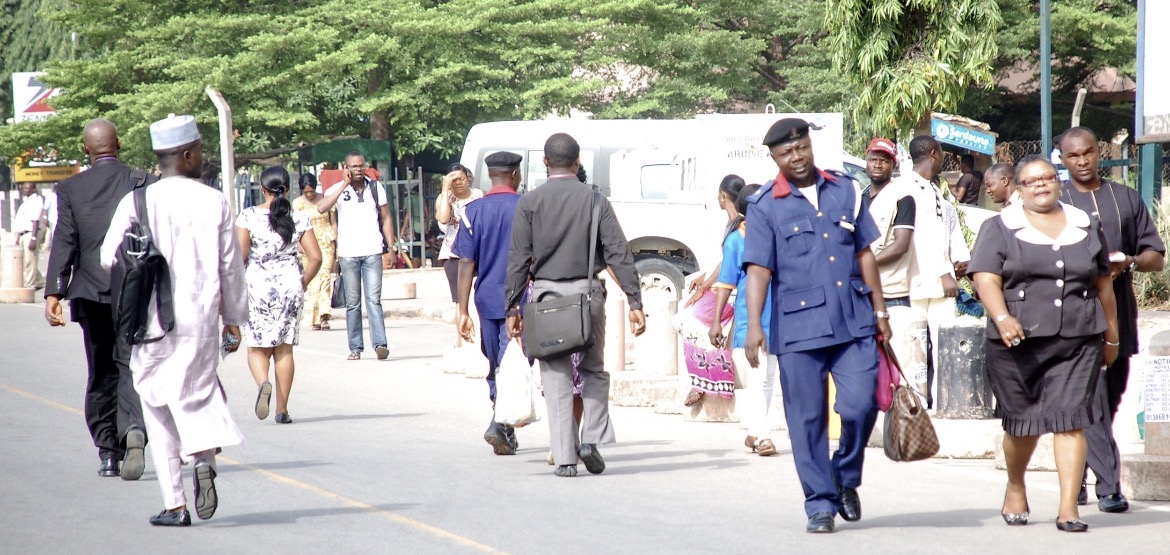
A visit to the FCTA Secretariat and several MDAs across the territory on Wednesday showed notable compliance with the directive. Workers were observed at their desks, attending meetings, processing files, and carrying out routine official duties.
Although some offices recorded lighter attendance compared to pre-strike levels, the overall atmosphere reflected a return to normal operations, with essential services gradually coming back on stream.
Residents who rely on FCTA services also expressed cautious relief, noting that delays experienced during the strike had begun to ease.
Background to the Strike
The industrial action, organised by workers under the Joint Union Action Committee, was triggered by unresolved grievances relating to welfare and working conditions within the FCT public service. The strike disrupted administrative activities across multiple MDAs, prompting the FCT Administration to seek judicial intervention.
By granting the interlocutory injunction, the court effectively halted the strike and set the stage for structured dialogue between labour representatives and the government.
Why This Matters
The resumption of work across the FCT carries broader significance beyond the immediate labour dispute:
- Service Delivery: The return of workers restores access to critical public services in the nation’s capital.
- Rule of Law: The episode reinforces the authority of court orders in resolving industrial disputes.
- Labour Relations: It highlights the tension between workers’ rights to protest and legal limits once disputes enter formal adjudication.
- Governance Stability: Smooth operation of FCTA offices is essential for effective administration in Abuja.
What Happens Next
With workers back at their posts, attention now turns to the dialogue expected to take place between labour unions and the FCT Administration. Observers say meaningful engagement will be crucial to preventing a relapse into industrial action once legal restraints are lifted.
For now, Abuja’s public service machinery is slowly returning to full capacity, offering residents a sense of normalcy after days of disruption—while the underlying issues await resolution at the negotiating table.
Related: “You Do This One!” — Doris Ogala Praises Mercy Johnson After Angela Okorie’s Shocking Arrest